

Inline Gearbox vs Right Angle Gearbox: Choosing the Right Gearbox for Your Application
Compare inline gearbox vs right angle gearbox. Then, assess torque output and space efficiency.
When it comes to selecting a gearbox for your industrial application, the decision between an inline gearbox and a right angle gearbox can significantly impact performance, efficiency, and space utilization. These gearboxes are among the most commonly used gearbox configurations, each offering unique advantages and specific use cases. Understanding the differences between inline and right-angle gearboxes is essential for choosing the right solution.
What Is a Gearbox?
A gearbox is a mechanical device used for power transmission between an electric motor and driven equipment. It modifies speed, torque, and direction using different gear types such as helical gears, spur gears, worm gears, or planetary gears. Gearboxes are commonly used in industrial applications ranging from conveyors and mixers to robotics and packaging machinery.
Inline Gearbox Overview
An inline gearbox has its input and output shafts aligned on the same axis. This linear design makes it compact and highly efficient. Most inline gear systems use helical gears, spur gears, or planetary gear arrangements for smooth operation and high torque output.
- Aligned shaft axis
- Compact design for space-saving layouts
- Uses helical gears for smooth operation
- Best for applications with limited vertical space
- High torque transmission and minimal backlash
Right Angle Gearbox Overview
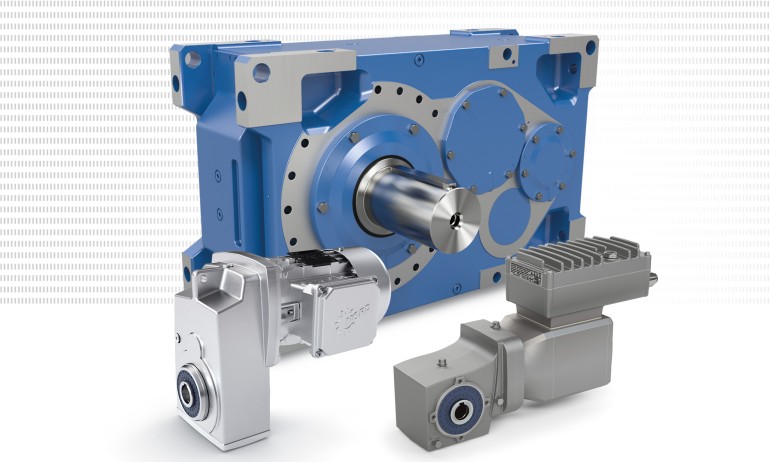
A right angle gearbox changes the direction of the shaft rotation by 90 degrees. It uses worm gears, bevel gears, or spiral bevel gears to achieve this right-angle turn. These are ideal for applications where space is limited or when a change in mechanical direction is needed.
- Shafts intersect at a 90-degree angle
- Can use worm, bevel, or spiral bevel gear designs
- Offers more flexibility in layout
- Often has lower efficiency than inline due to worm drive losses
- Delivers higher torque at low speeds
Types of Gearboxes
- Planetary gearbox: High torque, compact size, ideal for servo applications
- Parallel shaft gearbox: Features output shafts are parallel to the input shaft
- Bevel gearbox: Redirects power at an angle using straight bevel or spiral bevel gears
Differences Between Inline and Right Angle Gearboxes
| Feature | Inline Gearbox | Right Angle Gearbox |
|---|---|---|
| Shaft Orientation | Aligned | 90-degree rotation |
| Common Gear Types | Helical gears, spur gears | Worm gear, bevel gear |
| Efficiency | High | Moderate to Low (especially worm) |
| Torque Output | High | Higher torque at lower speed |
| Size | Compact for linear setups | Compact for angular setups |
| Applications | Precision-driven systems | Applications with limited space |
Gear Reducers and Speed Considerations
Both configurations can function as gear reducers by lowering input speed to deliver higher torque at the output shaft. A speed reducer is essential in applications where gear ratios must be adjusted for the electric motor to work efficiently.
Inline gearboxes typically offer higher efficiency and precision, while right-angle gearboxes are advantageous in gearbox solutions requiring layout flexibility.
Parallel Shaft Gearbox vs Right Angle
A parallel shaft gearbox maintains the alignment of the input and output shaft but places them side-by-side. Unlike right angle gearboxes, which rotate the axis, parallel shaft gearmotors are great for tight horizontal spaces.
In contrast, a right-angle gearbox is better when a directional change is needed in compact vertical systems.
Choosing the Right Gearbox for Your Application
- Torque and load requirements
- Directional needs (linear vs angular)
- Physical layout and available space
- Preferred gearbox shaft alignment
- Gear ratios and reducer requirements
- Mounting position and orientation
- Output speed and input power compatibility
Applications Where Space Is Limited
In many industries, space constraints are a primary design challenge. Right-angle gearboxes may offer the best fit in these cases, especially when equipment needs to fit into tight envelopes or workstations with limited access. Their compact footprint and directional change make them ideal for conveyors, printing machines, and mixers.
Selecting a Gearbox Supplier
When sourcing gearboxes, choose a trusted gearbox supplier like eMotors Direct or other reputable providers who offer comprehensive technical support and a variety of gearbox configurations. A good supplier can help you choose the right gearbox based on your application's torque, shaft, and space requirements.
Troubleshooting Your Gearbox
Troubleshooting your gearbox includes identifying symptoms like abnormal noise, heat, or misalignment. Check the gearbox's input and output for vibration, inspect the output shaft and motor shaft, and examine lubrication and gear wear.
Common issues include:
- Incorrect lead angle
- Worn gear teeth
- Misaligned shaft axis
- Dirty or degraded lubricant
- Faulty seals or bearings
Final Thoughts on Gearbox Selection
The choice between an inline gearbox and a right angle gearbox is critical to system performance. Inline designs are favored for their high efficiency, smoother operation, and gear train compactness. On the other hand, right-angle gearboxes offer better spatial flexibility and higher torque output in lower-speed scenarios.
When you're choosing a gearbox, be sure to assess your space limitations, mechanical demands, and desired efficiency. The right decision leads to longer-lasting performance, improved uptime, and optimal mechanical function.
Whether you're designing a new system or replacing an old unit, knowing the key specs and capabilities of inline and right-angle gearboxes will help you choose the right product and avoid costly mistakes.
FAQs
- What is an inline gear and how does it affect performance?
- An inline gear configuration uses a gear alignment where the input and output shafts are in a straight line. This layout is efficient for speed and torque transfer and ideal for applications where space is limited. Helical gears have better efficiency and noise reduction in inline setups.
- How does torque differ between right-angle and inline gearboxes?
- Right-angled gearboxes are known for handling torque at lower speeds, especially when using a right angle worm or bevel configuration. Inline gearboxes, however, can deliver consistent speed and torque in high-efficiency systems.
- Why choose Emotors Direct when selecting the right gearbox?
- Emotors Direct helps in selecting the right gearbox by offering guidance on suitability for different applications. Whether you need an inline, right-angle, or planetary gearboxes offer solution, they carry a wide inventory for any system requirement.
- What should I consider about the gearbox shaft when choosing a reducer?
- When evaluating the gearbox shaft, consider if the system needs to feature input and output shafts in-line or at an angle. Some gearboxes use parallel shafts, while others use a screw-like gear to manage direction and speed, as seen in right-angle designs.
- How does a right-angle gearbox work in transmission systems?
- A right-angle gearbox redirects transmission motion at a 90-degree turn. These gearboxes use bevel or worm mechanisms that allow them to handle high loads while fitting into tighter spaces. Many right angle worm systems are valued for compact yet powerful output.
- What is the purpose of a speed reducer in gear-driven systems?
- A speed reducer lowers the RPM from the electric motor to increase torque. Gearboxes also offer torque amplification while slowing down rotational speed. For high precision, planetary gearboxes offer smooth reduction ratios across various gear types.
- What are the differences between inline and right-angle gearboxes?
- The differences between inline and right-angle gearboxes lie in shaft orientation and space efficiency. Inline units are linear and compact, while right-angled gearboxes redirect motion. Each different gearbox style supports unique suitability for different applications, from conveyors to robotic arms.